


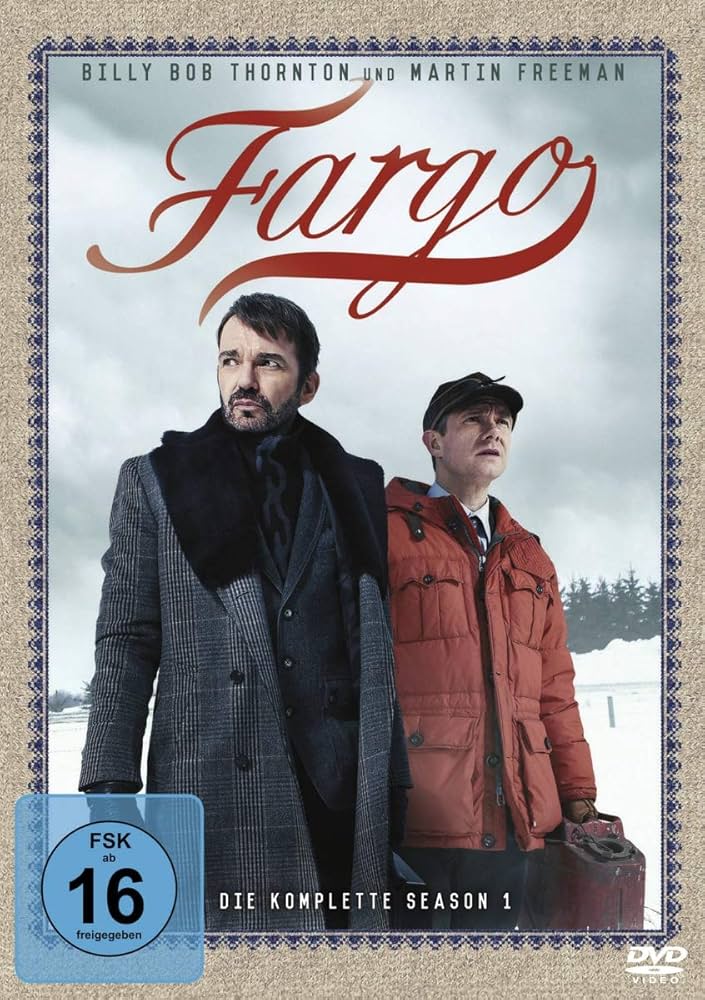
I think this show is very soulful. Do you agree? When I first watched this, I unironically wanted to travel to the American Mid West.
2 messages omitted.








Completely schizo revelations and yet no one to tell them to.
17 messages omitted.
>exceptions to the rule
Do you have actual data to back that up?
Let's assume you are a simple well-meaning Bernd, lurking and posting on Kohlchan and saw that most of '"that" type of content is posted via Tor, and concluded that Tor users all must be "those" people.
I don't think that is the case at all.
And now that UK introduces stricter online surveillance (oh we shouldn't forget about insane EU crap like Chatcontrol though!), which isn't about the "well-being of children" at all, but UK govt simply wants to know what their citizens are doing online, many will reach to VPNs and Tor as well - not just kids to avoid the filters. And they are right, they really should, and it's great that such tools exist.


Homosexuality was legal on Fascist Italy, Francoist Spain, Vichy's France, Antonescu's Romania and some other Nazi-aligned regimes during WW2. Meanwhile on the USSR and Communist Europe it was illegal and punishable with death.
The British fascists like Oswald Mosley also supported homosexuality:
>Regarding my attitude towards homosexuality, I have long taken the view on basic ground of liberty that adults should be free to do what they wished in private. - Sir Oswald Mosley
Let's not forget that OG commnists like Stalin, Che Guevara, Lenin, Mao, etc condemned homosexuality as a bourgeois perversion and killed faggots. Even Karl Marx himself said that homosexuality was almost as horrible as pedophilia.
Is this why the modern neonazi movements are full of trannies and faggots?
8 messages omitted.




I fucking hate how certain "people" shit on anyone who doesn't worship doctors as some mega authority. These fuckers
- Give you garbage diagnoses whenever you're too difficult of a patient
- Frequently prescribe garbage medication that actually harms you or does nothing at all
- are just a glorified meds dispensers tbh
Yeah you are literally hitler for self-diagnosing or using your own brain to solve your shit but the doc that gets paid to peddle poison like oxycontin and in the past stuff like cigarettes knows best of course and you should always listen to them no matter what. (and now in Canada they also suggest you just kill yourself) I will NEVER stop seething over people who harrass you for trying to figure things out on your own instead of paying some mega Jew.
14 messages omitted.
Hmm, yeah this is an interesting summary.
The more I think about it the more I'm inclined to believe the problem is just that the average doctor simply isn't invested in your life and health as you are. This is why they are tend to simply throw known garbage diagnoses towards you even though clearly that doesn't solve the issue and don't investigate further. If this isn't negligence I don't know what is, you have to switch doctors at this point or just start investigating yourself.
It doesn't matter how smart they are, the incentive is to give you a drug and make you fuck off ASAP unless there's an obvious solution. This is why they prescribe outright dangerous and useless shit sometimes, they either don't care or don't know. (incompetent) I think incompetence is a lot more common than people think too cause there are people out there who work for years yet somehow don't manage to learn anything from their jobs.
Bottom line is there are good reasons not to expect a doctor to solve any deeper issues and to put them under scrutiny IMO.
Never said otherwise.
But doctor in most cases never really treats you.
First thing to know is: the body heals itself. People can only do to create the circumstances it can do that.
For example a surgeon can put a broken bone to place and then an assistant fix the parts in place with a cast, but from there the body mends the bones.
Or the physician can prescribe you antibiotics against certain germs, for this example let's say a type of bacteria. Antibiotics is a poison that kills that bacteria - and some of the bacteria your body needs too and even perhaps some of your cells. It can't kill you (as long as you just take what prescribed), but it harms you too. Also it does not heal you. What antibiotics does is reducing the amount of bacteria so your body can deal with the rest and heal itself from the harm the bacteria and the antibiotics itself caused.
Beyond this the body needs water, nourishment, and rest so it can do its job. In case of some common illnesses - such as common cold which can be caused about over 300 types of viruses (such as covid) - that is all we can do really. The doctor also can say: bed rest, drink lotsa fluids (classic tea with honey and lemon example), take care your temperature doesn't go too high. That's all.
Seeing a doctor, or rather a doctor seeing you can have psychological effect on the patient. He will imagine he is "treated" by a professional who knows what he is doing and then the body of the patient (comforted by the thought) will heal itself better.







>just learned about the history behind Colombus Day
italians truly are the real christ of nations.
and shitlibs want to take this shit from us just to give another holiday to gorilla niggers? hell nah.
the year is 2025 and italophobia is still more alive than ever, to the point that even shitlibs indulge in anti italian discrimination at every chance they get.
3 messages omitted.