






Are guns legal to privately own in your country? Do you believe you are safer without them?

Police are trained by Israeli Contractors, so they automatically assume everybody they encounter is a criminal, is planning to be a criminal, is engaging in criminal activity, or has been drinking.
Jewish paranoia is pretty epic, and training police to be paranoid about everybody including 8 year old children or midget pet goats is problematic.




If anybody wants to get Banned, comment below.⬇️

Old-fashioned curses, profane substitutions, and historical insults include a mix of religious minced oaths, medieval terms, and Shakespearean jabs: [1] (https://www.reddit.com/r/AskHistory/comments/qb89kd/what_were_historical_insults_and_swear_words/), [2] (https://www.ancient-origins.net/history-ancient-traditions/swear-words-0017538), [3] (https://www.quora.com/What-are-some-examples-of-old-fashioned-cuss-swear-words-and-their-meanings)
Minced Oaths (Religious Substitutions)
• Gadzooks: A 17th-century exclamation derived from "God’s hooks" (referring to Christ's crucifixion nails).
• Bejabbers: An Irish-origin substitute used instead of "by Jesus".
• Consarn / Consarn you: A 19th-century rural American soft substitute for "God damn".
• Tarnation: A mild exclamation and shortening used in place of "damnation".
• By the great horn spoon: A classic Western United States expression used instead of "by God".
• Zooterkins / Zounds: 17th-century expressions of shock or anger coming from "God's wounds". [1] (https://greatbigstory.com/ten-old-fashioned-profanities/), [2] (https://matadornetwork.com/life/21-amazing-forgotten-curse-words-need-bring-back/), [3] (https://theweek.com/articles/466276/10-oldfashioned-swears-spice-cussin), [4] (https://www.mentalfloss.com/language/words/10-old-fashioned-swears-spice-your-cussin), [5] (https://www.quora.com/What-are-some-examples-of-old-fashioned-cuss-swear-words-and-their-meanings)
Shakespearean & Early Modern Insults
• Bedswerver: A term coined by William Shakespeare in The Winter's Tale to describe an adulterer or cheater.
• Fustilarian: An insult used by Falstaff in Shakespeare's Henry IV, Part 2 to describe a messy, overweight person.
• Scullion: A low-status kitchen servant used as a general term for a contemptible, dirty person.
• Cullion: A 16th-to-17th-century term for a base, worthless person (or a testicle).
• Tosspot: An old word for a heavy drinker, bumbling drunk, or sot. [1] (https://www.facebook.com/ancientoriginsweb/videos/14-old-swear-words-that-should-totally-make-a-comeback-part-1/584798724573643/), [2] (https://www.listenandlearn.org/blog/old-english-swear-words-origins/), [3] (https://matadornetwork.com/life/21-amazing-forgotten-curse-words-need-bring-back/), [4] (https://www.ancient-origins.net/history-ancient-traditions/swear-words-0017538), [5] (https://www.reddit.com/r/AskHistory/comments/qb89kd/what_were_historical_insults_and_swear_words/), [6] (https://greatbigstory.com/ten-old-fashioned-profanities/)
Victorian & Archaic Slang
• Zounderkite: A Victorian-era term used to call someone a clumsy idiot.
• Fopdoodle: An 18th-to-19th-century word for an insignificant, foolish, or silly person.
• Smellfungus: A term popularized by Laurence Sterne to describe a chronic complainer, whiner, or killjoy.
• Rantallion: An 18th-century vulgar slang word for a man with disproportionate anatomy.
• Bescumber: An early 20th-century/archaic verb meaning to spray or cover with dung. [1] (https://www.facebook.com/ancientoriginsweb/videos/14-old-swear-words-that-should-totally-make-a-comeback-part-1/584798724573643/), [2] (https://www.ancient-origins.net/history-ancient-traditions/swear-words-0017538), [3] (https://matadornetwork.com/life/21-amazing-forgotten-curse-words-need-bring-back/)
If you want to focus on a specific era—like Old English, Shakespearean, or the Wild West—let me know and I can give you a deeper list from that time period.
Old German insults, curses, and whimsical pejoratives often rely on quirky compound words, animal comparisons, or historical occupational quirks rather than pure profanity. [1] (https://www.learngermanonline.org/german-curse-words/), [2] (https://tandem.net/blog/german-insults), [3] (https://www.facebook.com/superangrygerman/posts/german-insults-weird-witty-and-surprisingly-specific-which-is-your-favourite-sup/122185579898744416/)
Classic & Whimsical German Insults
• Der Lackaffe – A show-off or dandy (literally "varnish monkey")
• Die Arschgeige – A useless or foolish person (literally "butt violin")
• Der Armleuchter – A bonehead or knucklehead (literally "chandelier")
• Der Schweinehund – A vile or lazy scoundrel (literally "pig-dog")
• Der Backpfeifengesicht – Someone with a face that desperately needs a slap
• Der Korinthenkacker – A pedantic nitpicker (literally "raisin-shitter")
• Die Trantüte – A slow, lifeless person (literally "slow whale-blubber bag")
• Der Piefke – A derogatory term used by Austrians for a German person
• Der Rotzlöffel – A bratty child (literally "snot-spoon")
• Der Erbsenzähler – A bean-counter or overly meticulous person [1] (https://tandem.net/blog/german-insults), [2] (https://www.facebook.com/superangrygerman/posts/german-insults-weird-witty-and-surprisingly-specific-which-is-your-favourite-sup/122185579898744416/), [3] (https://www.learngermanonline.org/german-curse-words/)
Traditional Expletives & Curses
• Leck mich am Arsch – The classic "kiss my ass" (historically famous from Goethe's play Götz von Berlichingen)
• Himmeldonnerwetter! – An old-fashioned, booming exclamation of anger or surprise (literally "sky-thunder-weather")
• Himmelherrgott! – A traditional religious oath/curse invoking God
• Kruzifix! – A southern German/Bavarian Catholic exclamation of frustration
• Geh zum Teufel! – "Go to the devil!" (Go to hell) [1] (https://www.reddit.com/r/German/comments/1fae7v6/please_teach_me_some_german_swear_words/), [2] (https://lingvist.com/course/learn-german-online/resources/german-curse-words/), [3] (https://www.instagram.com/reel/DPgb8WNCIFL/?hl=en), [4] (https://vidalingua.com/german-swear-words), [5] (https://www.learngermanonline.org/german-curse-words/)
If you want to focus on a specific region (like Bavarian or Swiss dialect) or a particular time period (such as Middle High German), let me know and I can provide more specialized terms.

Why don’t we reinstate slavery for pedophiles? Either we kill them like barbarians, send them to jail and force the government to baby sit them, or put them to work. This is obviously a joke thread, but why, why is it morality wrong to have this as an option?

>Like a 50yo who has a 20yo lover is a pedo... How? I dunno.
Women are highly competitive in the dating market, which is why they are so brutal to other women, which surprises even men who tend to be far more respectful to their fellow bros.
The attitude is just extreme jealousy because they know at 40+ they have little power to attract a quality man even with financial and social success under their belt.
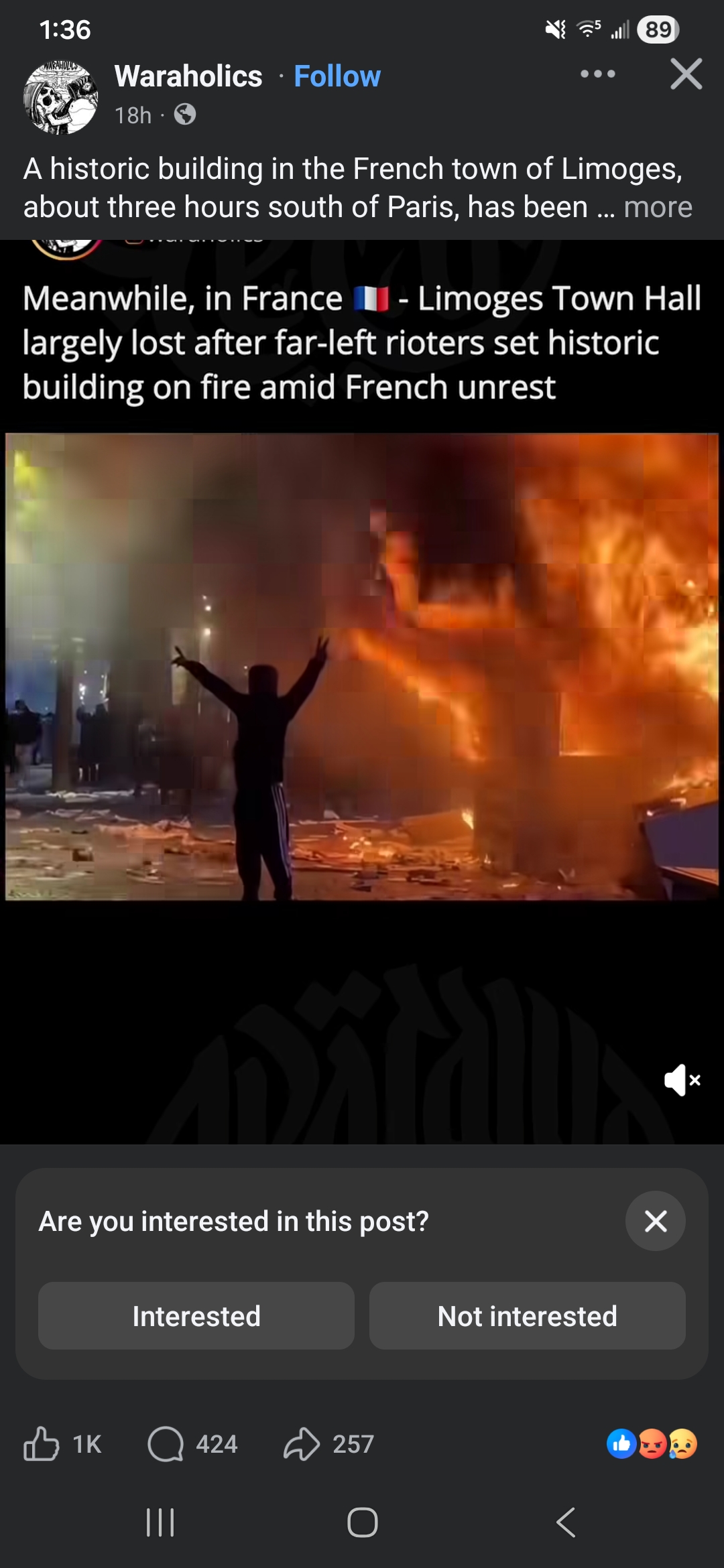
France is currently reeling from massive nationwide protests that turned violent over the weekend. Over 550,000 people took to the streets to protest declining school conditions and high living costs, leading to around 1,800 arrests.France is currently on high alert due to widespread and increasingly violent student protests over school conditions and teacher shortages, alongside ongoing civil and public sector disruptions.
U.S. Embassy & Consulates in France (.gov)
+2
Key Causes of the Current Alert:
Student Protests & Demonstrations: More than 250,000 protesters took to the streets across the country in early October 2026, with classes disrupted at over 500 high schools. The demonstrations focus on teacher shortages, overcrowded classrooms, and declining school facilities.
Travel Weekly
Violent Clashes & Road Closures: Some student protests have turned violent, leading to police confrontations, localized riots, burning vehicles, and major public transportation and road disruptions.
Broader Crises: France is also managing public sector strikes, cyberattacks targeting supermarkets, destructive fires, and heavy national debt pressures.
U.S. Embassy & Consulates in France (.gov)
+1
Travel and Safety Guidance:
U.S. Embassy Warnings: The U.S. Embassy & Consulates in France advises travelers to avoid demonstration areas, anticipate public transit delays, and monitor local news.
Travel Advisory Level: The U.S. State Department maintains a Level 2 Travel Advisory for France (Exercise increased caution due to terrorism and unrest).
Crates Of Glass Bottles Dropped Off For Rioters In France. A disturbing pattern is emerging across Western nations, and it’s getting harder to ignore. Similar to the tactical staging of materials seen during previous civil unrest in America, footage from France and Milan now shows identical methods being deployed in real-time. This striking consistency raises serious questions about the organic nature of these uprisings.
Are these riots truly grassroots, or is there a coordinated, well-funded effort at play to destabilize civilizations across the West? From one country to the next, the playbook appears the same, suggesting a much larger, darker agenda is orchestrating this chaos. It’s a chilling reminder that without addressing the root cause, this destabilization is destined to move on to the next city.
#FranceRiots #migration #Italy #French #Europe
They know they can’t actively put people into chambers like during WWII so they are doing what they think are sly methods to k!ll immigrants. My hands are still shaking typing this and I haven’t been able to stop crying while doing the research and investigation for this… bc NOBODY deserves these type of horrible conditions. These are not detention centers… they are 21st century DXXTH CAMPS. SHUT DOWN ADELANTO NOW AND FREE THE DETAINEES!
ABC7 Eyewitness News ABC News NBCLA NBC News Dateline NBC Los Angeles Times L.A. TACO 🌴🌮 CBS LA CBS News The New York Times FOX 11 Los Angeles FOX 11 Assignment Desk N+ UNIVISION LOS ÁNGELES Univision Telemundo Telemundo 52 Inland Coalition 4 Imm Justice immigo LA | IE | LB | Virtual Immigrant Defenders Law Center CHIRLA Shut Down Adelanto Coalition Public Counsel Catholic Charities USA Catholic Charities San Bernardino & Riverside Counties
#shutdownadelanto #humanrights #chingalamigra #adelanto #immigrants


Imagine if there was a video game of this.
It's Over Comrades, We are so Doomed. 💔☠️⚠️
Rumours claiming that North Korean leader Kim Jong Un suffered a severe brain haemorrhage, fell into a coma, or died are unverified and false. State media released public photos showing Kim alive and active following the online speculation.
Kim Yo Jong is a North Korean politician and diplomat, and sister of WPK General Secretary Kim Jong Un. She is widely believed to be among the most powerful
What if she will be the next supreme leader then MW4 wins in prediction and we might all be doomed...hope that doesn't happen and Stay safe Leader Kim...😭🪖
#cod #mw4 #northkorea #modernwarfare4
I would say its " told u this gonna happen" look.The neck crack sfx 😭😭💀💀💀it's not a "you're next" stare, it's a "look at what happened, is this all worth the revenge you seek?"Ghost doesnt even need to move his body at all. His pure gaze onto price was enough for price to feel the bloodlust xD"If you thought I was going to kill you before..." 😂The instant snap after the door closed 😂 "You lucky I'm in the fuckin chair."That’s when John knew, he done fucked up.Dude really gave him the “I swear when we get outta here”"If you thought shit was wicked BEFORE"I wonder how many people realise the "It's good to see you again, John" line is a callback to MWII when Ghost takes his mask off and Price says "It's good to see you again, Simon"This what lead to cod ghosts thank you for coming to my Ted talk 😂Crazy cause in the originals price is the last one left standing. Yuri died, soap died, gaz died, ghost died. Now the whole thing is flipped, and ghost is the last left standing. I love the original storyline better but they both tore at my heart.I'm really starting to believe that ghost is actually Logan from cod ghosts and using an alternate name. And I know they're 2 different characters simply cause Logan and David were amercian and ghost here is clearly of some kind of UK desent (scot brit irsh) but idk something about the man says I'm from another game title.


President Donald Trump (https://www.google.com/search?kgmid=%2Fm%2F0cqt90&q=Donald+Trump) is officially calling artificial intelligence "super intelligence" (or "SI"), following a late-September 2026 Executive Order that directed federal agencies to replace the terms "AI" and "artificial intelligence" in official documents. [1] (https://www.forbes.com/sites/conormurray/2026/10/08/trump-calls-anyone-who-says-ai-instead-of-super-intelligence-an-enemy/), [2] (https://www.whitehouse.gov/presidential-actions/2026/09/inaugurating-the-era-of-super-intelligence/)
Key Details of the Rebranding
• The New Term: "Super Intelligence" or "SI". [1] (https://www.whitehouse.gov/presidential-actions/2026/09/inaugurating-the-era-of-super-intelligence/), [2] (https://www.forbes.com/sites/conormurray/2026/10/08/trump-calls-anyone-who-says-ai-instead-of-super-intelligence-an-enemy/)
• The Rationale: Trump has argued that the word "artificial" makes the technology sound fake and that "super intelligence" is a more positive, accurate reflection of its capabilities. [1] (https://www.politico.com/news/2026/10/08/trump-ai-super-intelligence-renaming-01112404), [2] (https://www.youtube.com/shorts/unkS6b3Vghg), [3] (https://www.youtube.com/shorts/I6PHPKdZjuE)
• Federal Policy: Under the executive order, all executive branch departments and agencies are required to use the new nomenclature in non-statutory documents and public communications, and the White House has updated its digital platforms to reflect the change. [1] (https://www.politico.com/news/2026/10/08/trump-ai-super-intelligence-renaming-01112404), [2] (https://www.whitehouse.gov/presidential-actions/2026/09/inaugurating-the-era-of-super-intelligence/)
• Enforcement & Reactions: Trump publicly declared that anyone who continues to say "AI" is "the enemy". The move has drawn mixed reactions internationally and across the tech sector, though some industry figures and companies have publicly aligned with the shift. [1] (https://www.bbc.co.uk/news/articles/cqy4z9pv4w0po), [2] (https://www.politico.com/news/2026/10/08/trump-ai-super-intelligence-renaming-01112404), [3] (https://www.forbes.com/sites/conormurray/2026/10/08/trump-calls-anyone-who-says-ai-instead-of-super-intelligence-an-enemy/)
Watch President Trump discuss his decision to rename artificial intelligence to super intelligence:


>last reply on /int/ 2 days (before>>365438 posted while typing this)
>daily users 3
>bottom of first page 22 days ago
>”not another comic for months”
>shit threads
>/b/ is most popular board
>slower than orgchan’s /m/ board
I’m not saying KC.rip has to be fast, I’m not saying I no longer have fun on here. But I noticed I find myself scrolling KC.org more than here. I don’t even post too often as much I probably should. Can one start to think why this might be? This is at its slowest and it’s been slow for quite a while. I definitely see a light at the end of the tunnel but for now since i’ll put it at the start of August, since then KC has officially entered the dark age.
All who reply in this thread are true troopers for making it this far.