Lite mode. Switch to Full
invert_colors
logout
/sci/
/sci/
Post a Replyarrow_backarrow_downward
TexasBernd2026-07-23 21:11:56 · 2wNo. 363535reply
If not biologically, then how should we measure age on other planets?
GermanyBernd2026-07-23 21:18:07 · 2wNo. 363536reply
Carbon dating, lol
United StatesBernd2026-07-24 00:14:42 · 2wNo. 363539reply
You can always ask as long as its a male planet, but lord help you if you ask a female planet's age.
CanadaBernd2026-07-24 12:38:40 · 2wNo. 363571reply
Sybau
United StatesBernd2026-07-24 13:15:48 · 2wNo. 363572reply
Take your meds
MoscowBernd2026-07-24 14:03:12 · 2wNo. 363573reply
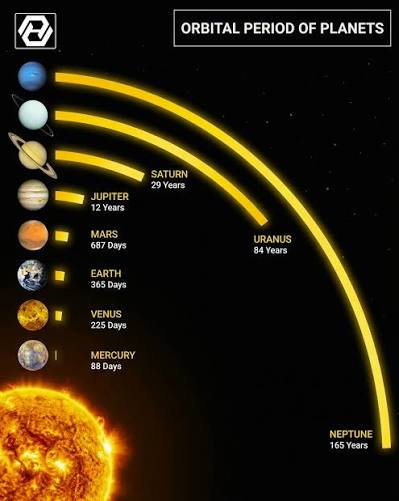
just do earth years to mars years conversion.
it'd work even if one ages differently on both planets i think
FinlandBernd2026-07-24 14:56:30 · 2wNo. 363574reply
from the moment it began to meet the definition of a planet
United StatesBernd2026-07-24 15:59:50 · 2wNo. 363576reply
by using local orbital years, standard Earth years, or planetary rotation counts.
CanadaBernd2026-07-24 16:04:43 · 2wNo. 363578reply
Dumb question with all things considering,by using local orbital years, standard Earth years, or planetary rotation counts.
The NetherlandsBernd2026-07-24 21:17:52 · 2wNo. 363601reply
Some planets (not Mars) don't even have distinct seasons, so why would people living there care for their years? I think we should abandon years and months, and always use single calendar on all planets. Preferably single timezone, too. And age can be measured in kilohours or something.
United StatesBernd2026-07-24 21:21:14 · 2wNo. 363602reply
cause they are still doing a revolution around the sun or something
United StatesBernd2026-07-24 22:28:43 · 2wNo. 363603reply
Originally there used to be 13 months, 28 days each here on earth called the lunar calendar used by some ancient civilizations and such but that changed.
The NetherlandsBernd2026-07-24 23:55:20 · 2wNo. 363606reply
The only reason to count revolutions I can think of is "officer, she may not look like it but her planet already made eighteen revolutions around their sun so it's perfectly fine"
United KingdomBernd2026-07-25 05:11:01 · 2wNo. 363609reply
Ok how else would you track time wtf
The planet still has days when it turns around itself, makes sense you’d track it turning around the sun also
The NetherlandsBernd2026-07-25 09:05:51 · 2wNo. 363610reply
We track days not because the planet rotates but because day/night cycle has many effects on our lifes. Seasons historically also used to have such effects, but now it's much smaller and will become negligible on other planets.
And for tracking time any single unit is enough, no need for years.
MoscowBernd2026-07-25 09:31:47 · 2wNo. 363611reply
Like what unit? Seconds, minutes, hours? Measuring it in something cyclical and big is more convenient, and years are familiar to humanity. Didn't know there was a strong anti-year lobby out there. (I'm the previous posters btw I was just using VPNs)
 
I am just actually curious how you imagine this.
The NetherlandsBernd2026-07-25 10:14:18 · 2wNo. 363612reply
Seconds, minutes and hours can stay of course, since they always have the same duration. The age and long durations can easily be measured in kilohours or something, humanity changed many units throughout history without major issues.
 
Local time of the day will stay but only in the same way as current day of the week (you always know what day of the week today is, and you can schedule something for "next Tuesday", but you never say "let's do it on 32nd week of the year" unless you're in accounting). And local years are not needed, only for scientific purposes.
United KingdomBernd2026-07-25 17:22:40 · 2wNo. 363621reply
Correct
CanadaBernd2026-07-25 17:54:15 · 2wNo. 363623reply
You all do realize it just is what it is don't you? It's all just human made up concepts,just a bunch of Human Constructs.
United KingdomBernd2026-07-26 02:21:50 · 2wNo. 363643reply
Who cares
United StatesBernd2026-07-26 02:31:56 · 2wNo. 363649reply
TexasBernd2026-07-26 03:40:29 · 2wNo. 363652reply
It an inevitable question we must ask ourselves.
TexasSpace and the LAWBernd2026-07-26 03:41:42 · 2wNo. 363653reply
This is the obvious answer but if fells kind of weird that in the martian law book, it would say “sex with 9.5745 year olds is lawfully premised”. This was more so a question about biological age, and mental age. Should we define law based on science? Or an engraved morality? By understanding what we are going to do on other planets we can figure out a system that works for our own.
 
>earth years to mars years conversion.
Would
Would this still work after humans left the solar system for exoplanets. Should every planet have its own age laws? Or should we implement biological age detection? I would hope that pedophillia would be eliminated by the time humans get into space, however if not probably not how should we prevent illegal activities if we don’t have a consistent age system, how do we force people to use them? Humans do not work on 0.0001 of a year
 
>If not biologically, then how should we measure age on other planets?
If we do this biologically then should we do this for our planet? Is it morally ok for a person who is over 21 but the mental age of 6 to drink alcohol? What about someone who is over 18 wanting to have sex, but has never been through puberty? What if we don’t like the answer, humans are at there most fertile age 20, the brain is fully developed at age 25. Should we base our laws on these?
 
I guess what I want to hear an opinion on is
HOW SHOULD WE STRUCTURE AGE LAWS ON OTHER PLANETS?
CanadaBernd2026-07-26 04:03:36 · 2wNo. 363655reply
Give it a rest gaytaco.
The NetherlandsBernd2026-07-26 04:25:17 · 2wNo. 363658reply
Such a subjective man made concept.
The NetherlandsBernd2026-07-26 04:27:43 · 2wNo. 363659reply
Structuring age laws on other planets should rely on biological milestones, local calendar years, and cognitive development. Key factors include Earth-standard biological age, local planetary year length, and psychological maturity.Biological and Calendar FactorsEarth-Standard Equivalence: Use a standard Earth year baseline (such as 18 or 21 solar years) to ensure physical and brain development are fully complete, no matter how fast or slow the new planet orbits its star.Local Orbital Adjustments: Convert standard developmental milestones into local planetary years. For example, on a planet with a very long year, a "1-year-old" local age might equal multiple Earth years, requiring fractional or decimal age limits.Environmental Stressors: Account for lower gravity or higher radiation, which might speed up or slow down physical growth and require adjusted medical definitions for adulthood.Rights and ResponsibilitiesTiered Privileges: Separate different legal rights—such as voting, driving, contracting, and military service—based on measured hormonal and neurological markers rather than a single arbitrary number.Universal Registry: Maintain a synchronized interplanetary digital registry based on universal Coordinated Universal Time (UTC) or atomic seconds to prevent confusion during space travel between planets.If you'd like, let me know:Is this for a science fiction story or a theoretical space law discussion?What is the orbital period of the target planet compared to Earth?I can help you build a more detailed legal code for your specific world.AI responses may include mistakes. Learn more
TexasBernd2026-07-29 02:47:56 · 2wNo. 363798reply
>Is this for a science fiction story or a theoretical space law discussion?
The second one, if humans conquered other planets we need a unitary law system that works for every planet including our own.
HungaryBernd2026-07-29 07:19:20 · 1wNo. 363802reply
Canonically they use Earth years in sci-fi. In sci-fi's far in the future it evolves standard year as humanity forgets Earth.
 
Kek.
The NetherlandsBernd2026-07-29 14:05:01 · 1wNo. 363808reply
Why would we need it? Today, even within single country law systems can be very different by region (your ball is from such a country) yet it somehow works.
/sci/Post a Replyarrow_backarrow_upward