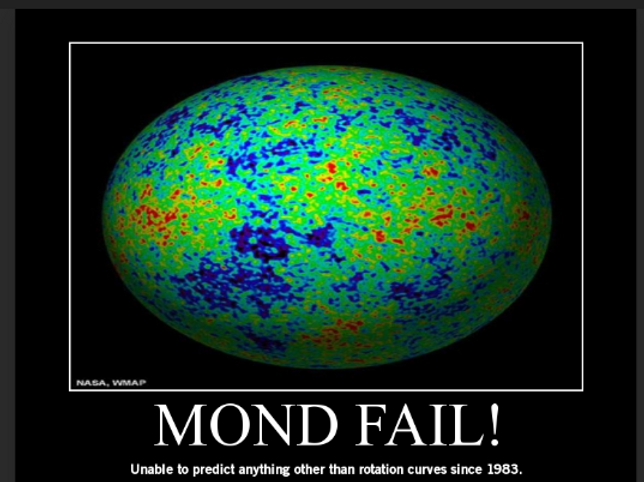
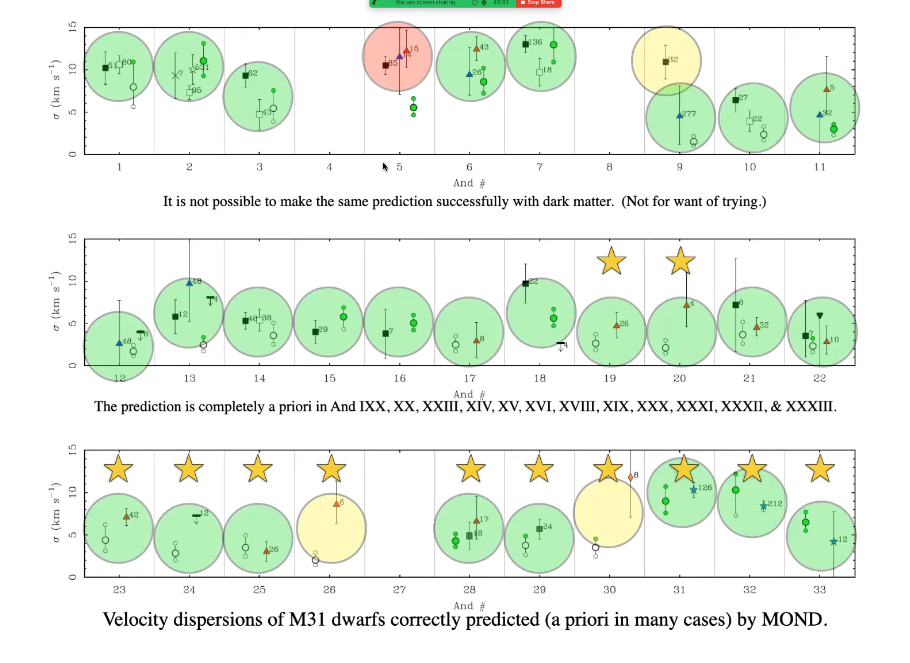
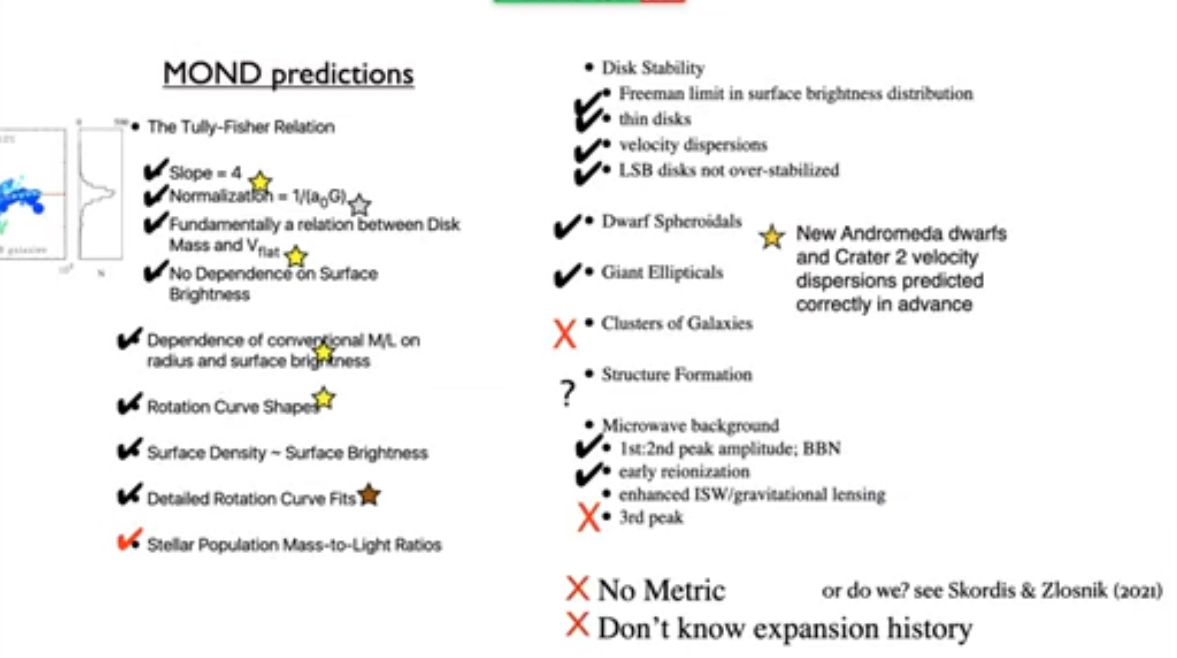
NO IT CANT BE NOOOOOOOOOOOOOOOOOOOOOOOOOOOOOOOOOOOOOOOOOOOOOOOOOOOOOOOOOOOOOOOOOOOOOOOOOOOOOOOOOOOOOOOOOOOOOOOOOOOOOOOOOOOOOOOOOOOOOOOOOOOOOOOOOOOOOOOOOOOOOOOOOOOOOOOOOOOOOOOOOOOOOOOOOOOOOOOOOOOOOOOOOOOOOOOOOOOOOOOOOOOOOOOOOOOOOOOOOOOOOOOOOOOOOOOOOOOOOOOOOOOOOOOOOOOOOOOOOOOOOOOOOOOOOOOOOOOOOOOOOOOOOOOOOOOOOOOOOOOOOOOOOOOOOOOOOOOOOOOOOOOOOOOOOOOOOOOOOOOOOOOOOOOOOOOOOOOOOOOOOOOOOOOOOOOOOOOOOOOOOOOOOOOOOOOOOOOOOOO
Today I will be researching MOND gravity, I’m kind of scared because I grew up with Dark matter throughout my time with physics so I will be sad if MOND seem to be right and all my time wasted.
I will make a separate thread about dark matter tho, for now this discussion is just about if MOND is correct.

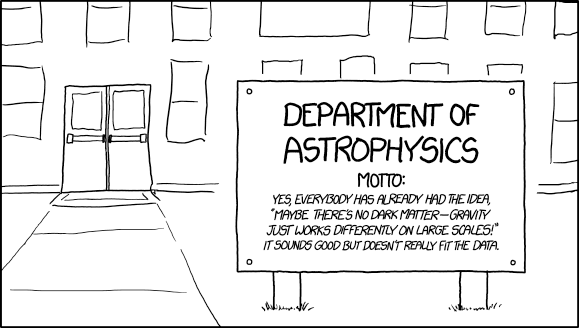

Recent research using data from the Gaia telescope has significantly weakened the case for Modified Newtonian Dynamics (MOND) as an alternative to dark matter. Specifically, studies analyzing the orbital speeds of wide binary stars have found strong evidence supporting Newtonian gravity and contradicting MOND's predictions. While MOND initially gained traction for explaining galactic rotation curves, it has faced challenges in accounting for other observations, and these new findings further diminish its credibility. MOND's origins:
MOND is an alternative theory to dark matter that modifies Newton's law of gravity to explain the observed rotation curves of galaxies, which show stars moving faster than expected based on visible matter. The Wide Binary Star Test:
A key test for MOND involves analyzing the orbital speeds of wide binary stars (pairs of stars separated by large distances). MOND predicts that these stars should orbit faster than Newtonian gravity suggests, due to its modification of gravity at low accelerations. Gaia Telescope Data:
The Gaia mission has provided precise measurements of star positions and velocities, enabling scientists to test MOND's predictions about wide binary stars. A recent study by Banik and collaborators, using a rigorous Bayesian statistical analysis of Gaia data, found strong evidence in favor of Newtonian gravity and against MOND's predictions. This study used a more robust methodology than previous studies that had claimed to support MOND. Implications:
These findings suggest that MOND is not a viable explanation for the observed phenomena at the scale of wide binary stars. While MOND may still have some success in explaining certain cosmological phenomena, it is increasingly clear that it is not a complete or accurate theory. Dark Matter remains:
Despite the challenges to MOND, the existence of dark matter is still supported by a wide range of observational evidence, including gravitational lensing and the structure of galaxy clusters. The search for the nature of dark matter continues.
Furthermore, because MOND is not a relativistic theory, it struggles to explain relativistic effects such as gravitational lensing and gravitational waves. Finally, a major weakness of MOND is that all galaxy clusters, including the famous Bullet Cluster, show a residual mass discrepancy even when analyzed using MOND.
(MOND) was proposed by Israeli physicist Mordehai Milgrom. He introduced the concept in 1982 and published it in 1983. MOND is an alternative to the theory of dark matter, suggesting that Newton's laws of gravity need modification at very low accelerations, which are common in galaxies. This modification aims to explain the observed flat rotation curves of galaxies without invoking the presence of dark matter.

>Furthermore, because MOND is not a relativistic theory, it struggles to explain relativistic effects such as gravitational lensing and gravitational waves
Yes it does have a hard time with waves but it kind of tells you that it’s impossible to make a relativistic theory. Even know that restricts parameters it’s still possible to write a theory that works.
According to “MOND via Matrix Gravity”
Use c = 1 and the coordinates (𝑥^µ)= (𝑡, 𝑥^𝑖), where the Greek indices run over µ= 0, 1, 2, 3
so that 𝑥^0 = 𝑡; the Minkowski metric is ηµν = diag (−1, 1, 1, 1).
𝑥^𝑖 = Cartesian coordinates
What you may be talking about is BIMOND (bimetric relativistic MOND) you can read it for your self in part 3